3.25 : Steady State Concentration
5.8K views
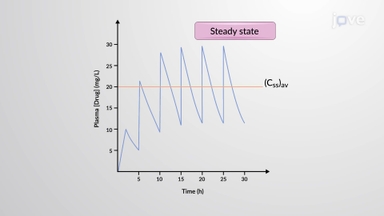
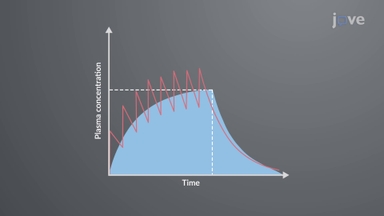
A steady state refers to the level of a drug in the body once it has reached an equilibrium between administration and elimination. It represents the point at which the drug administration rate equals the drug elimination rate, resulting in a relatively constant concentration in the body over time. The dynamic equilibrium is crucial to ensure the drug's effectiveness with minimal risk of toxicity.
Most drugs are administered in repeated doses at fixed intervals or through continuous intravenous infusions to achieve a steady state. After each dose, the drug is absorbed, distributed, metabolized, and eliminated from the body. As subsequent doses are administered, the drug accumulates until the amount eliminated from the body in each dosing interval matches the amount administered. This leads to a stable concentration being maintained within a predictable range.
The rate at which a drug reaches a steady state depends on its half-life, which is the time it takes for the body to eliminate half of the drug. A drug typically takes around four to five half-lives to reach a steady state. During this time, the drug concentration gradually increases until it reaches a plateau where the administration and elimination rates become equal.
Once a steady state is achieved, the drug's concentration fluctuates within a narrow therapeutic range, ensuring a consistent pharmacological effect. Deviations from the steady-state concentration may lead to suboptimal treatment or increased risk of adverse effects. Factors such as patient characteristics, drug interactions, and changes in drug clearance should be considered when determining the optimal dosing strategy to achieve and maintain a steady state.
From Chapter 3:

Now Playing
3.25 : Steady State Concentration
Pharmacokinetics
5.8K Views
3.1 : Pharmacokinetics: Overview
Pharmacokinetics
9.0K Views
3.2 : Drug Absorption Mechanism: Passive Membrane Transport
Pharmacokinetics
6.6K Views

3.3 : Drug Absorption Mechanism: Carrier-Mediated Membrane Transport
Pharmacokinetics
5.8K Views
3.4 : Drug Absorption: Factors Affecting GI Absorption
Pharmacokinetics
6.0K Views
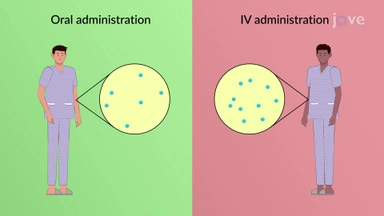
3.5 : Bioavailability: Overview
Pharmacokinetics
4.1K Views
3.6 : Factors Influencing Bioavailability: First-Pass Elimination
Pharmacokinetics
7.9K Views
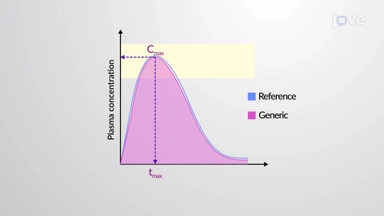
3.7 : Bioequivalence: Overview
Pharmacokinetics
1.8K Views
3.8 : First Pass Effect
Pharmacokinetics
8.8K Views
3.9 : Time Course of Drug Effect
Pharmacokinetics
2.6K Views
3.10 : Drug Distribution: Tissue Binding
Pharmacokinetics
3.8K Views
3.11 : Physiological Barriers
Pharmacokinetics
5.0K Views
3.12 : Drug Distribution: Plasma Protein Binding
Pharmacokinetics
8.5K Views
3.13 : Compartment Models: Single-Compartment Model
Pharmacokinetics
3.0K Views
3.14 : Compartment Models: Two-Compartment Model
Pharmacokinetics
7.0K Views
See More