
2.8 : Effect of Income on Demand Curve: Inferior Goods
"Inferior goods" is an economic term for goods whose demand decreases as consumers' income increases. It is a fascinating concept that provides insights into how changes in financial circumstances affect consumer behavior. One classic example of this is the demand for public transportation.
Income Rise and Inferior Goods: When people's income rises, they often aspire to upgrade their lifestyle, which may include buying a personal vehicle for commuting. As a result, the demand for public transportation, considered an inferior good in this scenario, decreases, causing a leftward shift in the demand curve.
Income Reduction and Inferior Goods: Conversely, during periods of reduced income, consumers might need to cut back on expenses and revert to more cost-effective options such as public transportation. This increases demand for these inferior goods, causing the demand curve to shift to the right.
However, these trends might not hold for everyone, as individual preferences and habits can cause deviations. For instance, someone might continue to use public transportation even after a rise in income due to environmental concerns or convenience.
The concept of "inferior goods" doesn't imply a lack of quality but describes how consumer preferences change with income.
Do Capítulo 2:

Now Playing
2.8 : Effect of Income on Demand Curve: Inferior Goods
Demand and its Elasticities
154 Visualizações
2.1 : Demand
Demand and its Elasticities
575 Visualizações
2.2 : Law of Demand
Demand and its Elasticities
533 Visualizações
2.3 : Mathematical Representation of the Demand Curve
Demand and its Elasticities
269 Visualizações

2.4 : Market Demand
Demand and its Elasticities
173 Visualizações
2.5 : Effect of Related Goods on Demand Curve: Substitutes
Demand and its Elasticities
175 Visualizações
2.6 : Effect of Related Goods on Demand Curve: Complementary Goods
Demand and its Elasticities
293 Visualizações
2.7 : Effect of Income on Demand Curve: Normal Goods and Luxury Goods
Demand and its Elasticities
259 Visualizações
2.9 : Other Factors Affecting Demand
Demand and its Elasticities
87 Visualizações
2.10 : Elasticity of Demand (Ed)
Demand and its Elasticities
128 Visualizações
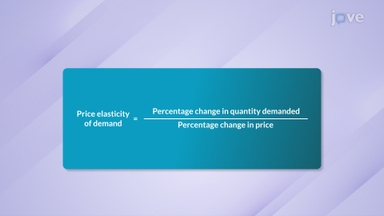
2.11 : Ed through Percentage Method
Demand and its Elasticities
74 Visualizações
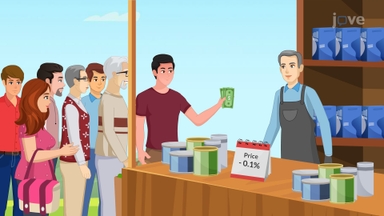
2.12 : Degrees of Elasticity of Demand
Demand and its Elasticities
126 Visualizações
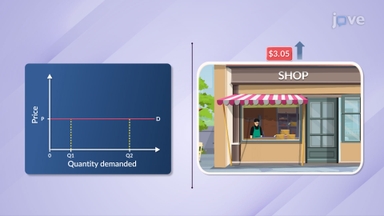
2.13 : Degrees of Elasticity of Demand and the Demand Graph
Demand and its Elasticities
339 Visualizações
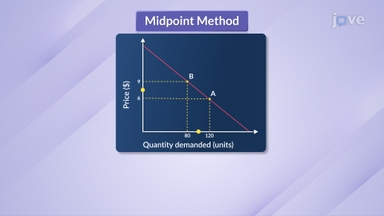
2.14 : Ed through Mid-point Method
Demand and its Elasticities
102 Visualizações

2.15 : Elasticity and Slope
Demand and its Elasticities
176 Visualizações
See More

Copyright © 2025 MyJoVE Corporation. Todos os direitos reservados