The number of protons in the nucleus of an atom is its atomic number (Z). This is the defining trait of an element. Its value determines the identity of the atom. For example, any atom that contains six protons is the element carbon and has the atomic number 6, regardless of how many neutrons or electrons it may have. A neutral atom must contain the same number of positive and negative charges, so the number of protons equals the number of electrons. This means that the atomic number also indicates the number of electrons in an atom.
Mass Number
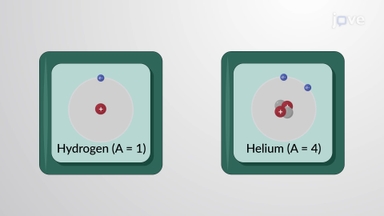
The total number of protons and neutrons in an atom is called its mass number (A). The number of neutrons is the difference between the mass number and the atomic number: (A – Z). In their most common form, many elements contain the same number of neutrons as protons. For example, the most common form of carbon has six neutrons and six protons.
Isotopes
In the early 1900s, English chemist Frederick Soddy realized that an element could have types of atoms with different masses that were chemically indistinguishable. These different types are called isotopes — atoms of the same element that differ in mass. Isotopes differ in mass because they have different numbers of neutrons but are chemically identical because they have the same number of protons. Soddy was awarded the Nobel Prize in Chemistry in 1921 for this discovery.
This text is adapted from Openstax, Chemistry 2e, Section 2.3: Atomic Structure and Symbolism, Section:2.2: Evolution of Atomic theory and Anatomy and Physiology 2e, Section 2.1: Elements and Atoms: the building blocks of matter.
From Chapter 3:
Now Playing
3.5 : Atomic Number and Mass Number
Fundamentals of Chemistry
8.8K Views
3.1 : What is Matter?
Fundamentals of Chemistry
9.4K Views
3.2 : The Periodic Table And Organismal Elements
Fundamentals of Chemistry
8.1K Views
3.3 : Atomic Structure
Fundamentals of Chemistry
10.5K Views
3.4 : Chemical Symbols
Fundamentals of Chemistry
7.7K Views

3.6 : Atomic Weight
Fundamentals of Chemistry
8.3K Views
3.7 : Isotopes and Radioisotopes
Fundamentals of Chemistry
8.1K Views
3.8 : Electron Behavior
Fundamentals of Chemistry
7.6K Views
3.9 : Introduction to Chemical Bonds
Fundamentals of Chemistry
7.5K Views
3.10 : Ionic Bonds
Fundamentals of Chemistry
6.4K Views
3.11 : Covalent Bonds
Fundamentals of Chemistry
6.9K Views
3.12 : Hydrogen Bonds
Fundamentals of Chemistry
7.6K Views
3.13 : Ions, Molecules, and Compounds
Fundamentals of Chemistry
7.5K Views
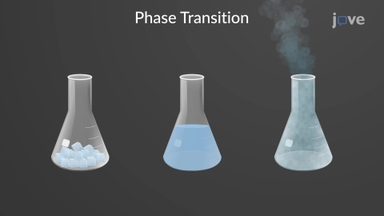
3.14 : States of Matter
Fundamentals of Chemistry
1.0K Views

3.15 : Colloids and Suspensions
Fundamentals of Chemistry
1.6K Views
See More

Copyright © 2025 MyJoVE Corporation. All rights reserved