
12.10 : Product and Portfolio Metrics II
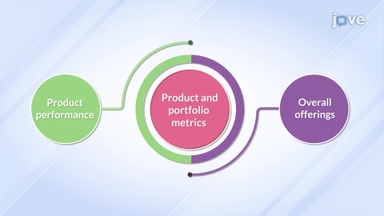
Product and portfolio metrics provide the necessary insights to optimize resources and drive profitability.
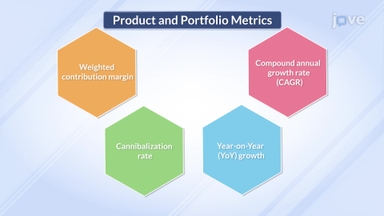
Weighted Contribution Margin is a crucial metric for understanding the profitability of individual products relative to their share in the product mix. Calculated by multiplying the contribution margin of each product by its proportion in the total mix, it helps companies prioritize investment in high-margin items, like luxury apparel, that dominate sales. This metric also informs decisions on discontinuing less profitable products to optimize the portfolio.
Cannibalization Rate measures the impact of new product launches on existing offerings. For example, a car manufacturer might track how a new model affects sales of its predecessor. A high rate suggests the need to reposition the older model or adjust its pricing to maintain market share. Strategies like product differentiation or market segmentation can also help mitigate cannibalization.
Compound Annual Growth Rate (CAGR) measures the average annual growth of a product's revenue over time, providing a clear view of the product's revenue growth trajectory. A tech company might use CAGR to evaluate the growth of its software subscription service over several years. If the CAGR for the software subscription service is consistently high, it indicates steady and sustainable development, thereby enhancing the product's long-term viability.
Year-on-year (YoY) Growth compares a product's revenue during the same period in different years. This metric is beneficial for gauging the effectiveness of seasonal promotions or product launches, such as a new fashion line introduced during a holiday season. By analyzing YoY Growth, companies can fine-tune their marketing strategies to enhance future performance.
장에서 12:
Now Playing
12.10 : Product and Portfolio Metrics II
Marketing Metrics
64 Views
12.1 : Introduction to Marketing Metrics
Marketing Metrics
199 Views
12.2 : Metrics and KPIs
Marketing Metrics
91 Views

12.3 : Measuring Marketing Metrics
Marketing Metrics
149 Views
12.4 : Market Metrics
Marketing Metrics
71 Views

12.5 : Heart and Mind Share Metrics
Marketing Metrics
51 Views

12.6 : Margins and Profits Margins I
Marketing Metrics
127 Views

12.7 : Customer Profitability Metrics I
Marketing Metrics
161 Views
12.7 : Margins and Profits Margins II
Marketing Metrics
25 Views
12.8 : Customer Profitability Metrics II
Marketing Metrics
51 Views
12.9 : Product and Portfolio Metrics I
Marketing Metrics
71 Views
12.11 : Price Metrics
Marketing Metrics
126 Views
12.12 : Digital Marketing Metrics I
Marketing Metrics
75 Views

12.13 : Sales Force Metrics
Marketing Metrics
30 Views
12.13 : Marketing Metrics and Analytics
Marketing Metrics
77 Views
See More

Copyright © 2025 MyJoVE Corporation. 판권 소유