13.3 : Design Example: Aggregate Gradation
309 views
The right type and quality of aggregates are crucial for concrete as they significantly influence its properties, mix proportions, and cost-effectiveness. If different sources are available for sand, the commonly used fine aggregate in concrete, the selection of sand is primarily based on its gradation.
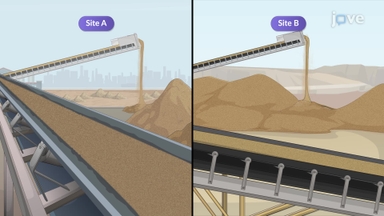
The grading, or particle-size distribution, of sand is determined using sieve analysis, with standard sizes ranging from 150 μm to 10 mm (ASTM No. 100 sieve to 3⁄8 in. sieve). Sand is sampled for gradation from a flowing aggregate stream, conveyor belts, or stockpiles. A single sample typically represents about 45 to 50 tons of sand. Finally, the test portions for sieve analysis are obtained from the field sample using a sample splitter.
Concrete using very fine sands can be uneconomical, and coarse sands can result in less workable mixes. Generally, well-graded sand, without a large deficiency or excess of any size and giving a smooth grading curve within the region bound by the grading curve for fine and coarse sand, is preferred in concrete.
From Chapter 13:

Now Playing
13.3 : Design Example: Aggregate Gradation
Design Examples
309 Views

13.1 : Design Example: Dimensioning of Concrete Masonry Construction
Design Examples
288 Views

13.2 : Design Example: Joints in Concrete Pavements
Design Examples
481 Views
13.4 : Design Example: Managing Concrete Workability
Design Examples
298 Views
13.5 : Design Example: Distributing Reinforcements in Concrete Sections
Design Examples
259 Views

13.6 : Design Example: Sustainability in Concrete Building
Design Examples
388 Views