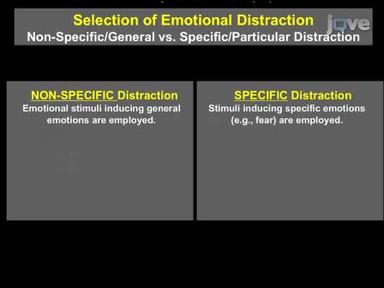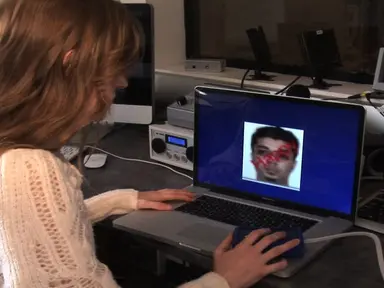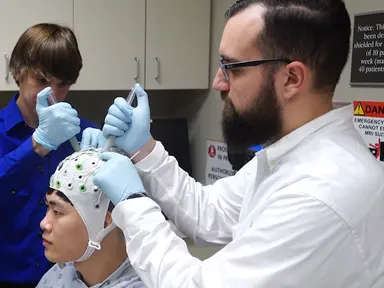
The overall goal of the following experiment is to show how task design can influence the interpretation of results in FMRI studies, particularly when taking paradigms from other imaging modalities. This is achieved by first choosing an appropriate task for the cognitive or psychological construct of interest in this case, the visual oddball paradigm. The second step involves designing three different versions of the visual oddball task using the same stimuli, which will result in the volunteer modifying their behavior during the FMRI scan.
Next, the FMRI data is analyzed in order to quantitatively assess the differences in brain activation between task versions. Results are obtained that show how cognitive and motor processes can be differentiated based on appropriate experimental design and data analysis. This method can help answer key questions in the field of cognitive neuroscience, such as identifying the underlying neural substrates of human perception, cognition, and Behavior.
We first had the idea for this method when we realized that interpreting our own results in relation to the existing literature turned out to be difficult due to subtle differences in task design and experimental procedures across studies. To begin, choose an appropriate task to investigate the cognitive or psychological construct of interest before setting up the task. First, determine the appropriate number of trials required for a robust brain response as well as the sequence stimuli timing, and be sure to consider the hemodynamic response delay between stimulus onset and the measured brain response.
Download and install ceq software then rune to determine the stimulus order by optimally distributing the trials across the experiment based on number of trials, stimulus, duration, and scan parameters. Next, implement the previously determined order of stimuli in a suitable program for presenting the paradigm to the subject. Specify all information relevant to the paradigm in terms of type of stimuli, timing and responses.
The paradigm is the visual oddball task, which can be used to measure target detection responses and the effects of attention on target detection. There are three versions of the oddball task that can be prepared in the passive version. The subject only observes the visual stimuli and does not respond in the silent count version.
The subject should be instructed to count the target stimuli in their head. This task requires directing attention towards these stimuli and a discriminating process. Finally, in the respond version, the subject should push a response button upon seeing a target stimulus.
This task requires attention, discrimination processes and selection or production of a response to target stimuli. Begin setting up for the FMRI experiment. By first preparing the scanner room.
Connect the bottom section of the head coil to the scanner bed. Then place clean protective covers on the scanner, bed and cushions. Next turn on the display device that will present the experimental paradigm to the subject inside the scanner, as well as record the responses using a held button press device.
Then open the software that will deliver the experimental paradigm and enter a name for the log file. Also, register the subject in the MR Scanner database and make sure that the MR sequences to be run are set up and ready. Screen all potential subjects for MRI contraindications during the study recruitment procedure.
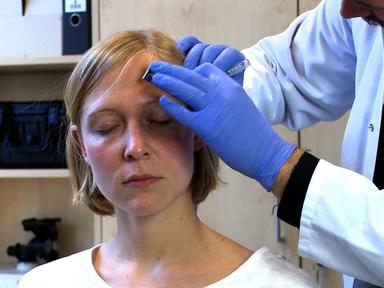
Then upon the subject's arrival, perform thorough MRI safety screening with trained personnel. Ensure that the subject is metal free and that items such as a belt watch or jewelry have been removed, as well as any pocket items such as coins. Once the subject is ready, ask them to sit on the scanner bed and place ear plugs for hearing protection.
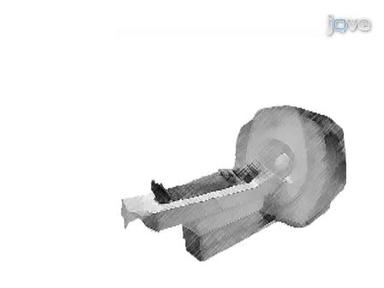
Then have them lie down comfortably on the scanner bed with their head in the imaging coil. Use small cushions to secure the subject's head to minimize unwanted head movements during scanning. Then place the top section of the head coil over the subject's head and plug in the connectors.
Place a mirror on top of the head coil that will allow the subject to see the experimental paradigm displayed on the screen behind hand the subject, an emergency call button to stop the scan if required, as well as the response device. Finally, move the subject into the bore of the scanner before acquiring images First assure that the subject can hear the experimenter via the intercom and that they are comfortable and ready to begin the scan. Then perform a localizer scan to obtain the position of the subject's head in the scanner.
Next, perform a high resolution structural scan such as an MP rage. Then perform the functional MRI scans with the three runs of the visual oddball task. Speak to the subject in between runs to provide task instruction and reassurance and to assure that they are comfortable and ready to continue with the study.
When all structural and functional imaging is complete, inform the subject that the experiment is finished. Then enter the scanner room and help the subject out of the scanner. Select a software package that is suitable for analyzing the acquired FMRI data.
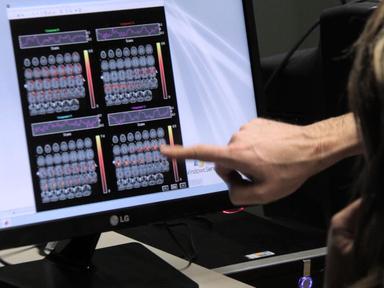
Begin by applying standard pre-processing steps to prepare the data for further analysis. Steps may include motion correction, slice timing, image co-registration, spatial smoothing, high pass temporal filtering, and spatial normalization. Next for the statistical analysis, first specify the onset times and durations of all events that occurred in the paradigm.
These are also termed explanatory variables or regressors. Then set up contrasts to determine which explanatory variables will be compared. For example, to identify the bold activation specific to detection of target stimuli, set up a contrast to specify that target stimuli are greater than non-target stimuli.
Perform the first level statistical analysis for each subject and each condition separately. Then once data has been acquired for multiple subjects, compare the three conditions using second level or group level analysis. The stimulation and analysis method elicited bold activation in brain regions associated with the visual oddball task.
The target greater than non-target contrast revealed no activation for the passive condition, but did reveal activation in both the count condition and the respond condition as seen here. Bold activation for the count condition against the passive condition can be seen here while the respond condition against the passive condition can be seen Here. All data represent the target greater than frequent.
Lower level contrast activation can be seen in the supplementary motor area SMA common to both conditions while middle frontal gyrus MFG activation is seen for the respond condition only. After watching this video, you should have a good understanding of how to design and implement FMRI studies and understand how the design can impact on the interpretation of your results. Don't forget That working with FMRI can be extremely hazardous and that precautions such as screening volunteers thoroughly should always be taken while performing this method.
In addition, these procedures should always be performed by trained personnel.I.