Real-Time Polymerase Chain Reaction-Based Detection and Quantification of Hepatitis B Virus DNA
2.8K Views
•
04:11 min
•
December 15th, 2023
DOI :
December 15th, 2023
•Chapters in this video
0:00
Introduction
1:35
Quantifying Hepatitis B Virus (HBV) DNA in Human Serum Samples Using Real‐Time PCR
Related Videos
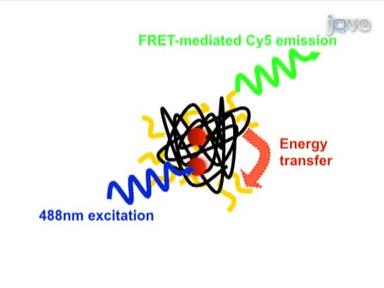
Combining QD-FRET and Microfluidics to Monitor DNA Nanocomplex Self-Assembly in Real-Time
11.0K Views
Chemically-blocked Antibody Microarray for Multiplexed High-throughput Profiling of Specific Protein Glycosylation in Complex Samples
15.4K Views
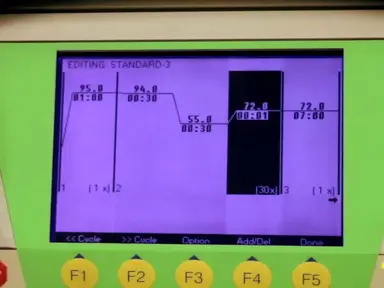
Polymerase Chain Reaction: Basic Protocol Plus Troubleshooting and Optimization Strategies
402.3K Views
Real-time Imaging of Single Engineered RNA Transcripts in Living Cells Using Ratiometric Bimolecular Beacons
11.7K Views
Probe-based Real-time PCR Approaches for Quantitative Measurement of microRNAs
33.0K Views
Dried Blood Spots - Preparing and Processing for Use in Immunoassays and in Molecular Techniques
39.8K Views
Absolute Quantification of Plasma MicroRNA Levels in Cynomolgus Monkeys, Using Quantitative Real-time Reverse Transcription PCR
11.5K Views
Isolation of Primary Patient-specific Aortic Smooth Muscle Cells and Semiquantitative Real-time Contraction Measurements In Vitro
3.5K Views
Real-Time Detection of Reactive Oxygen Species Production in Immune Response in Rice with a Chemiluminescence Assay
3.4K Views
Real-Time Quantification of the Effects of IS200/IS605 Family-Associated TnpB on Transposon Activity
2.3K Views

Copyright © 2025 MyJoVE Corporation. All rights reserved