
3.8 : Mechanisms of Drug Absorption: Paracellular, Transcellular, and Vesicular Transport
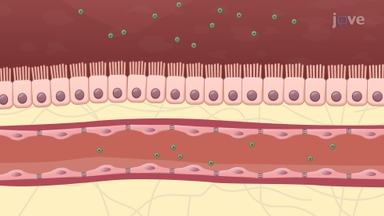
Drugs need to permeate cell membranes to reach their target sites after administration. Orally administered drugs must transcend intestinal epithelial membrane barriers to infiltrate the systemic circulation. Drugs with a molecular weight of less than 500 Daltons diffuse through gaps between neighboring cells, called paracellular pathways.
However, most drugs use the transcellular route, traversing directly through the cell membranes via two mechanisms: passive and active transport. Passive transport permits drug molecules to move freely through the lipid bilayer along the concentration gradient without energy expenditure.
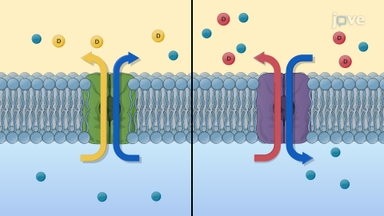
Active transport allows cells to move drugs against an electrochemical gradient. In primary active transport, membrane transporters utilize ATP to move drugs against the concentration gradient. Drugs are sometimes swapped for other solutes moving along their gradient via symport or antiport mechanisms. Such a process is called secondary active transport.
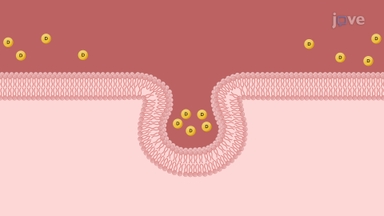
Lastly, vesicular transport is a method where the cell membrane invaginates to internalize large macromolecules or hydrophilic particles. This process encompasses phagocytosis (cell eating), the engulfment of large foreign particles or macromolecules, and pinocytosis (cell drinking), the internalization of fluids bearing small particles. These processes illustrate the complex and diverse ways drugs can navigate cellular barriers to reach their target sites.
From Chapter 3:
Now Playing
3.8 : Mechanisms of Drug Absorption: Paracellular, Transcellular, and Vesicular Transport
Pharmacokinetics: Drug Absorption
367 Views
3.1 : Drug Administration and Therapy Phases: Overview
Pharmacokinetics: Drug Absorption
405 Views
3.2 : Drug Absorption: Overview
Pharmacokinetics: Drug Absorption
499 Views
3.3 : Drug Delivery: Overview
Pharmacokinetics: Drug Absorption
273 Views
3.4 : Drug Delivery: Enteral Route
Pharmacokinetics: Drug Absorption
372 Views
3.5 : Drug Delivery: Parenteral Route
Pharmacokinetics: Drug Absorption
378 Views
3.6 : Drug Delivery: Miscellaneous Routes
Pharmacokinetics: Drug Absorption
305 Views
3.7 : Cellular Membranes and Drug Transport
Pharmacokinetics: Drug Absorption
256 Views
3.9 : Passive Diffusion: Overview and Kinetics
Pharmacokinetics: Drug Absorption
371 Views
3.10 : Pore Transport and Ion-Pair Transport
Pharmacokinetics: Drug Absorption
334 Views
3.11 : Carrier-Mediated Transport
Pharmacokinetics: Drug Absorption
232 Views
3.12 : Facilitated Diffusion
Pharmacokinetics: Drug Absorption
272 Views
3.13 : Active Transport
Pharmacokinetics: Drug Absorption
424 Views
3.14 : Vesicular Trasport: Endocytosis, Transcytosis and Exocytosis
Pharmacokinetics: Drug Absorption
845 Views
3.15 : Factors Influencing Drug Absorption: Anatomical Parameters
Pharmacokinetics: Drug Absorption
178 Views
See More

Copyright © 2025 MyJoVE Corporation. All rights reserved