The overall goal of this protocol is to demonstrate how to efficiently generate induced cardiomyocytes from cardiac fibroblasts with a poly cyonic MGT construct, expressing an optimal ratio of gata four, F two C, and TBX five. This method provides a valuable platform for induced cardiomyocyte research and will facilitate high through post screening and mechanistic studies of induced cardiomyocyte programming while also moving the field toward clinic applications. The main advantage of this technique is that using just a single retroviral construct, cardio fibroblasts can be efficiently converted to cardiomyocytes.
Clean the neonatal alpha myosin heavy chain GFP transgenic mouse with 75%volume to volume. Ethanol perform euthanasia. Then open the body cavity by making a horizontal incision from under one armpit to the other using sterile, blunt and bent forceps.
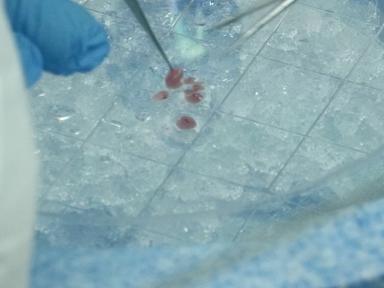
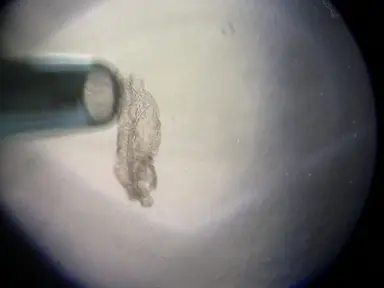
Dissect out the heart and place it in one well of a 24 well plate containing ice. Cold PBS observe GFP expression throughout the heart using fluorescence microscopy. Place three to 4G FP positive hearts into a 60 millimeter center well culture dish using sterile forceps and scissors, mince the hearts into small pieces less than one cubic millimeter.
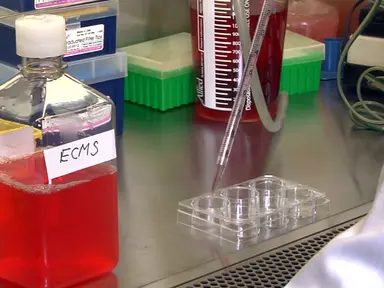
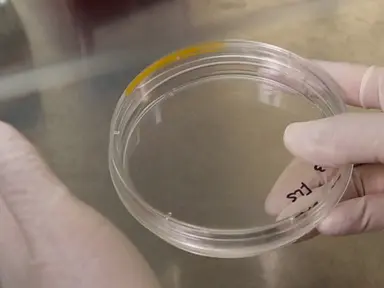
Transfer the minced hearts to a 10 centimeter dish and cover with two milliliters of fiberblast or FB medium. Leave the plates undisturbed for at least three hours in a 37 degrees Celsius incubator. Following incubation slowly add eight milliliters of prewarm FB medium to the dish containing the minced heart tissue.
Then incubate the tissue without disturbance except to change the medium every three days. On day seven, aspirate the culture medium and wash the cells with DPBS. Add three milliliters of 0.05%trips in EDTA to each plate and incubate at 37 degrees Celsius for five minutes.
Add five milliliters of FB medium to deactivate the trypsin, and then gently detach the cells with a cell scraper. Next, collect the cells and filter through 40 micron cell strainers to avoid contamination with heart tissue fragments. Pellet the cells by centrifugation at 200 times G for five minutes, beginning with isolated neonatal mouse hearts.
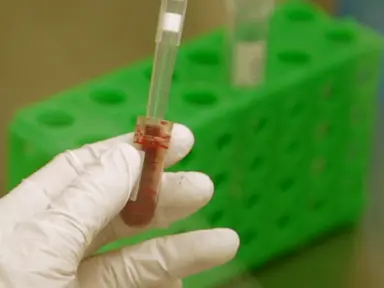
Cut each heart into four pieces that are still loosely connected. Transfer the hearts into a 15 milliliter conical tube containing eight milliliters of warm 0.05%tripsin EDTA and incubate at 37 degrees Celsius for 15 minutes. Following incubation, discard the tripsin EDTA and add five milliliters of warm type two collagenase vortex for one minute at medium speed, and then incubate the tube in a 37 degree Celsius water bath for three to five minutes.
Then vortex the tube again for one minute. Allow the tissue pieces to settle and collect the supernatant into a new tube containing five milliliters of cold FB medium. Add five milliliters of fresh type two collagenase to the tissue pieces and repeat the vortex and incubation steps.
Combine all the cell containing supernatants by filtering them through a 40 micron cell strainer. Centrifuge these cells at 200 times G for five minutes at four degrees Celsius. Following either cardiac fibroblast isolation method.
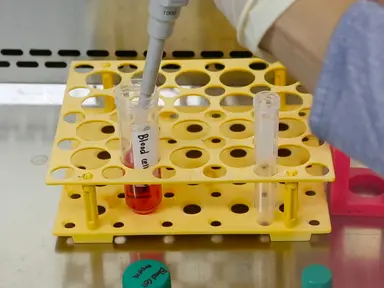
Wash the final cell pellet one time in 10 milliliters of magnetic activated cell sorting or max buffer. Remove 10 microliters for live cell counting and centrifuge the remaining cells at 200 times G for five minutes at four degrees Celsius for less than one times 10 to the seventh cells. Resuspend the cell pellet with 10 microliters of thigh 1.2 conjugated magnetic microbeads in 90 microliters of chilled max buffer and mix.
Well incubate the beads at four degrees Celsius for 30 minutes. To pellet the cells, add 10 milliliters of max buffer and centrifuge the samples at 200 times G for five minutes. Wash once with 10 milliliters of max buffer and resuspend the cell pellet in a total volume of two milliliters in a cell culture hood.
Set up a max separator and add an LS column. Equilibrate the column with three milliliters of max buffer. Pass the cell suspension through the LS column and wash three times with two milliliters of max buffer.
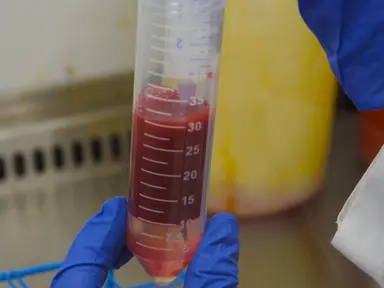
Then remove the LS column from the separator and elute three times with two milliliters of max buffer. Collecting the EIT in a 50 milliliter conical tube. Centrifuge the EIT at 200 times G for five minutes.
Resuspend the isolated fibroblasts in 10 milliliters of FB medium and count the cells, seed the cells into tissue culture dishes at appropriate densities in a gelatin pre-coded 24 well plate to reprogram cardiac fibroblasts. Add 500 microliters of induced cardiomyocyte or ICM medium containing poly brain to each well of the 24 well plates seated with cells. Add 10 microliters of the retrovirus to each well of isolated fibroblasts.
Incubate the plate with retroviral particles for 24 to 48 hours in a cell culture incubator. Then replace virus containing medium with 500 microliters of fresh ICM medium, changing the medium every two to three days. Begin positive selection of viral transduced cells by supplementing ICM medium with two micrograms per milliliter of pur mycin.
After three days of selection, change the medium to a maintenance dose of one microgram per milliliter pur mycin to visualize cardiac fibroblast conversion to cardiomyocytes. Observe pur mycin selected plates for GFP expression using an inverted microscope. Finally, 14 days following viral treatment, replace ICM medium with B 27.
Medium spontaneous beating cell loci may appear at three to four weeks following viral transduction expression of cardiac markers, including cardiac troponin t and alpha. Actinin can be detected by immunochemistry by days 10 to 14. Here, cardiac troponin T expression is seen in the I CMS converted from fibroblasts, which express GFP alpha actinin expression in the ICMs can be seen here.
Analysis by flow cytometry shows similar increases in cardiac troponin T expression, especially following pur mycin selection of induced cardiomyocytes. The mythology described here allows efficient generation of induced cardiomyocytes based on retro viral delivery of NGT transcription factors in a single construct.