
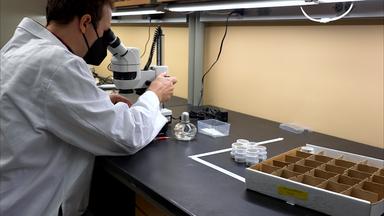
A Simple Fecal Flotation Method for Diagnosing Zoonotic Nematodes Under Field and Laboratory Conditions
2.1K Views
•
03:46 min
•
December 15th, 2023
DOI :
December 15th, 2023
•Chapters in this video
0:00
Introduction
1:35
Collecting Fecal Samples of Dogs for Nematode Detection
2:20
Flotation Technique for Detecting Nematodes in the Stool of Dogs
Related Videos
09:37
Helminth Collection and Identification from Wildlife
15.4K Views

08:03
Diagnosis of Ecto- and Endoparasites in Laboratory Rats and Mice
41.1K Views
11:58
The Nematode Caenorhabditis Elegans - A Versatile In Vivo Model to Study Host-microbe Interactions
9.3K Views
10:57
Determining Soil-transmitted Helminth Infection Status and Physical Fitness of School-aged Children
23.4K Views
05:55
Rapid Isolation of Wild Nematodes by Baermann Funnel
8.1K Views
09:02
Visualizing Bacteria in Nematodes using Fluorescent Microscopy
18.7K Views
08:58
RNA Fluorescence in situ Hybridization (FISH) to Visualize Microbial Colonization and Infection in Caenorhabditis elegans Intestines
3.9K Views
09:58
Environmental Screening of Aeromonas hydrophila, Mycobacterium spp., and Pseudocapillaria tomentosa in Zebrafish Systems
9.7K Views
06:48
High-throughput Measurement of Gut Transit Time Using Larval Zebrafish
7.4K Views
09:10
A Highly Scalable Approach to Perform Ecological Surveys of Selfing Caenorhabditis Nematodes
2.5K Views

Copyright © 2025 MyJoVE Corporation. All rights reserved