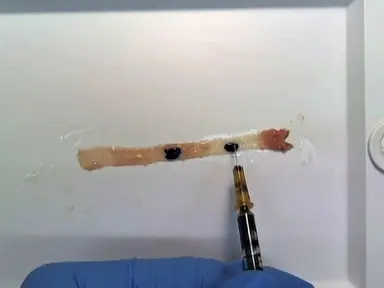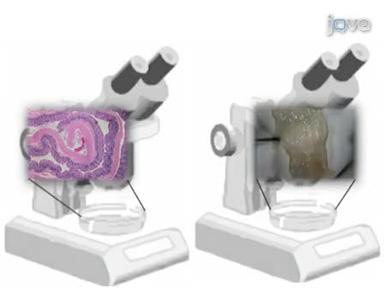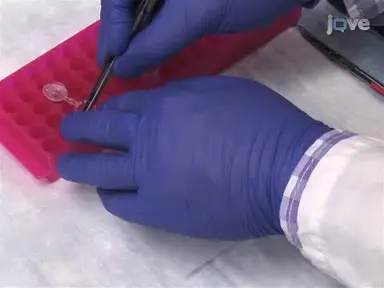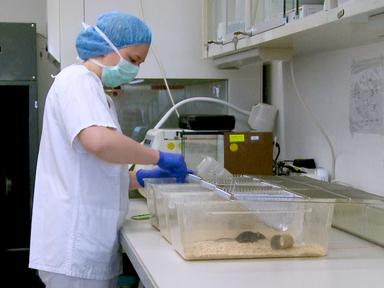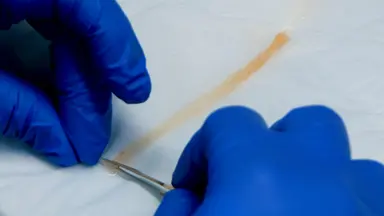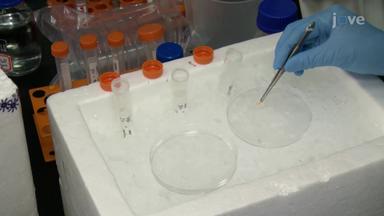
Due to the challenges associated with conducting clinical trials on Pouchitis, animal models can serve as valuable tools for studying Pouchitis drugs and the mechanisms. This protocol describes the method for establishing a rat model of Pouchitis. This experimental animal model of Pouchitis provides a foundation for studying the pathogenesis and the treatment of the condition.
With previous experience in mouse feeding and IPAA surgery remodeling, compressing learning curve down to around 10 subjects is feasible. A critical step in this process is construction and anastomosis of the G pouch. Post operative management also play a pivotal role in successful modeling.
The successful establishment of the rat Pouchitis model provide a solid platform for subsequent drug and mechanism research. Our team will always be committed to studying the pathogenesis of Pouchitis and the mechanism of drugs. To begin, position the rat on its back in dorsal recumbency on an anatomical bench.
Cover the surgical site with sterile gauze, soaked in bacteriostatic saline. After creating a six centimeter midline incision, reveal the peritoneal surface using a retractor. Then cut the terminal jejunum.
Position the sequel stump one to two centimeters from the ileocecal valve, and then cut it. Isolate the blood supply to the terminal jejunum and tie it off with an 8-0 suture thread. Now, begin the resection of the right hemicolon, carefully tying off the right hemicolon and middle colic vein.
Next, separate the inferior mesenteric artery and isolate the inferior rectal artery. Proceed to isolate down the rectum until reaching two centimeters from the anal verge. Then cut the distal rectum at an angle of approximately 45 degrees to prevent postoperative narrowing.
Then fold the terminal ileum into a J shape to create a pouch for the ileum. Using an interlocking stitch, perform posterior wall anastomosis and enhance the anterior wall with a modified conal stitch. Ensure there is no torsion in the mesentery.
At intervals, suture the anterior side walls of the pouch's opening and the lateral wall of the rectal stump, using an 8-0 suturing thread for traction. Then, apply a full layer continuous lock suture to both the anterior and posterior walls. Sequentially close the abdominal muscle fascia and skin using 4-0 sutures.
To treat the rat ileal Pouchitis model with DSS, dissolve four grams of DSS in 100 milliliters of pure water, freshly prepared daily. Administer pure water to the IPAA group and 4%DSS to the Pouchitis group from postoperative day 31 to day 35. Initially, both the IPAA and Ileal Pouchitis groups had equal body weights and were generally in good condition.
By the 35th day after surgery, the weight of the Ileal Pouchitis group was significantly lower than that of the IPAA group.