Our cell-free protein expression system, which typically requires a cold chain for transport now has a pioneering freeze-dried version. This version remains stable at ambient temperatures making it the first eukaryotic system available in this format. This simplifies transportation to labs and field applications.
The current experimental challenges of cell-free protein production include optimizing reaction conditions to ensure that recombinant proteins are properly folded and active. Although the cost-effectiveness of cell-free techniques versus conventional in vivo protein expression remains a significant challenge, the simplicity of our eukaryotic LTE cell-free system can produce helps alleviate this. The LTE cell-free system facilitates swift reconstitution and analysis of protein networks and biosynthetic pathways.
Its integration with technologies like AlphaLisa and in vivo assays enables functional analysis of complex systems, including the protein interaction network of SARS-CoV-2 and the hookworm secretone. The LTE cell-free system enables rapid, cost-effective production of hard-to-express proteins in a multiplex format. It offers easy optimization for protein synthesis, excelling and producing complex or toxic proteins.
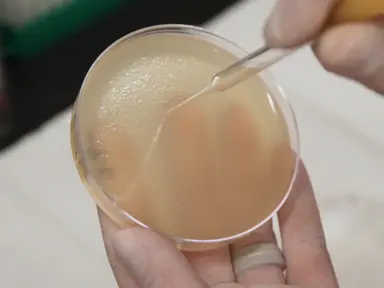
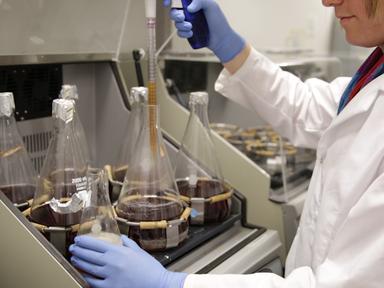
The system is scalable and provides consistent batch-to-batch quality. To begin, harvest the overnight cultures of Leishmania tarentolae. Measure the harvest optical density of the cultures at 600 nanometers using a 1:10 dilution in culture medium.
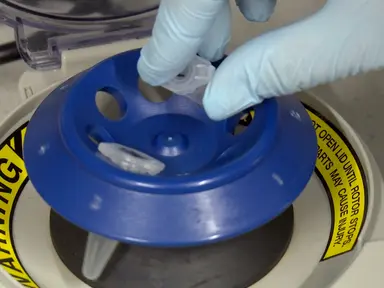
Calculate the target concentrate volume to achieve a final optical density of 300 at 600 nanometers. Transfer the harvested cell culture into suitable centrifuge bottles, centrifuge the bottles at 2, 500g for 10 minutes at four degrees Celsius. Then carefully decant the supernatant into a receptacle for culture waste.
Wash the cell pallet in 500, 200, and 20 milliliters of SEB buffer. Then pour the SEB resuspended concentrate into a suitable washed volumetric cylinder. Make up the volume to the target volume using cold SEB, and then gently mix using a pipette.
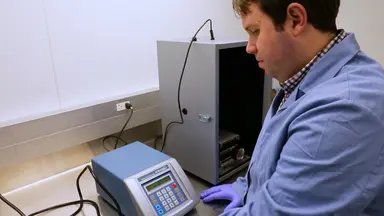
To lyse the cell concentrate transfer it into a pre-cooled nitrogen cavitation device pressurized to 70 bars, and incubate for 45 minutes on ice. Next, open the vent on the cavitation device and expel the lysate into a cleaned vacuum receiver flask placed on ice. Then transfer the lysate into centrifuge tubes and centrifuge at 10, 000 G for 15 minutes at four degrees Celsius.
After transferring the supernatant to fresh tubes, centrifuge the lysate at 30, 000g for 15 minutes at four degrees Celsius. Then transfer the supernatant to a fresh centrifuge tube placed on ice. Set up four PD-10 gravity-fed gel filtration columns per 10 milliliters of lysate in a rack format that allows them to drip into a suitable collection tray.
Add 2.5 milliliters of lysate into each column. Once it passes into the column, add 0.5 milliliters of elution buffer to settle the lysate. Remove the waste tray and place a fresh collection tray beneath the columns.
Then add 2.5 milliliters of elution buffer to elute the gel-filtered lysate. Collect the gel-filtered lysate in a fresh centrifuge tube. Next, measure the absorbance of the filtered lysate at 280 nanometers with a NanoDrop spectrophotometer.
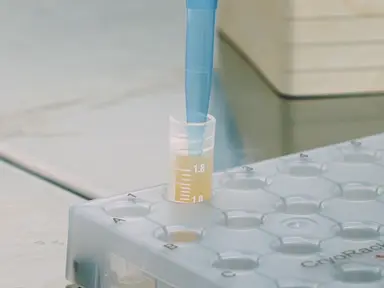
Add five times feeding solution to the lysate in a 2:5 ratio, then vortex the mixture thoroughly. Aliquot the mixture into 1.5 milliliter microcentrifuge tubes, and then snap freeze the tubes in liquid nitrogen for future use.