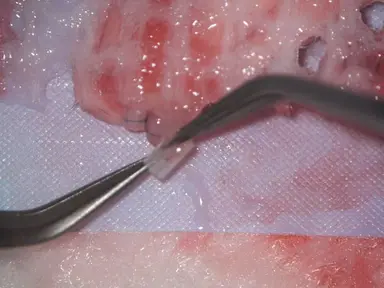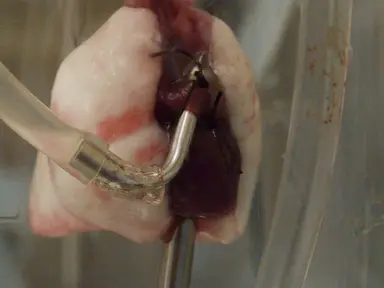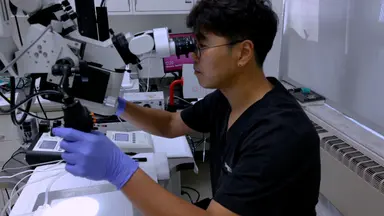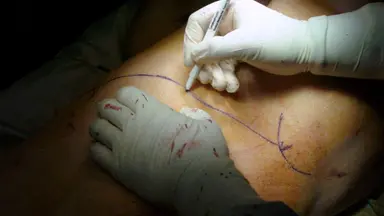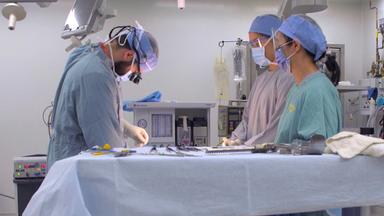
Experimental organ donation models generally mimic isolated situations of tissue injury related to the death process and/or events related to preservation and implantation of the organ. These models are very useful in the development of therapies that seek to increase the number of donations, and consequently decrease the weighting list of potential recipients. Accordingly, it has become important to develop different models, such as those inducing brain death in and circulatory death.
Since these events are associated with different deleterious process that compromise the functionality of the donated organs and the tissues. Anesthesia and presurgical preparation. Place the rat in a closed chamber with 5%isoflurane for one to four minutes.
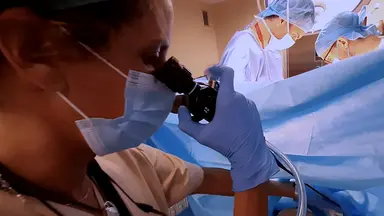
Confirm proper anesthetization by checking the toe pinch reflex. In the absence of reflex reactions, perform orotracheal intubation, 14 gauge Angiocath with the aid of a pediatric laryngoscope. With a previously-adjusted mechanical ventilator and tidal volume 10 milliliters per kilogram, 90 cycles per minute, and PEEP 3.0 centimeters H2O, connect the tracheal catheter to the ventilator and adjust the anesthetic concentration to 2%Remove fur from the regions of interest, head, neck, chest, and abdomen.
Then, using gauze, clean the surgical field and the animal's tail with an alcoholic solution of Chlorhexidine digluconate, 2%Disinfection procedure was repeated three times. Cut the tip of the animal's tail, place the thumb and index finger over the base of the tail, and then press and slide them away from the base. Collect a peripheral blood sample, 20 microliters through the tail for the total leukocyte count.Tracheostomy.
Perform longitudinal dissection of the cervical trachea, starting from the middle third of the neck to the suprasternal notch. Approximately 1.5 centimeters incision. After incision of the skin and subcutaneous tissue, dissect the cervical muscles until the trachea is exposed.
Place the 2.0 silk ligature beneath the trachea. Using micro scissors, tracheostomies the upper third of the trachea to achieve uniform ventilation. Horizontally cut the trachea between two cartilaginous rings to accommodate the diameter of a metal cannula, 3.5 centimeters.
Insert the ventilation tube and fix it with prepared ligatures. Connect the ventilation tube to the small animal ventilation system. Ventilate the rat with a tidal volume of 10 milliliters per kilogram, rate of 70 cycles per minute, and PEEP of 3 centimeters H2O.
Femoral artery and vein catheterization. So, expose the femoral triangle through a small incision, approximately 1.5 centimeters in the inguinal region. Identify and isolate the femoral vessels.
For this procedure, use a stereo microscope 3.2 times magnification. Place two 4.0 silk ligatures beneath the blood vessels, vein or artery, one distally and the other proximally. Close the most distal ligature and place a pre-adjusted knot in the proximal ligature and pull.
Insert the catheter through a small preformed incision in the vessels. Fixate the cannula to avoid dislocation. Connect the artery catheter to a pressure transducer and a vital sign monitoring system to record the MAP.
The transducer should be positioned at the level of the animal's heart. Connect the archery catheter to a pressure transducer and a vital sign monitoring system to record the MAP. The transducer should be positioned at the level of the animal's heart.
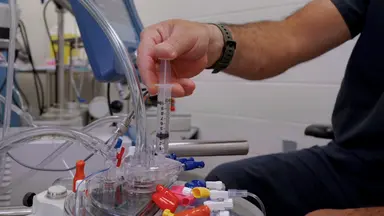
Place the syringe catheter 3 milliliters into the vein, aiming for hydration and exsanguination when necessary. Hemorrhagic shock induction. Through venous axis and with a heparinized syringe, remove small volumes of blood until MAP values of approximately 50 millimeters of mercury are reached.
Thus, establishing hemorrhagic shock. Note, aliquots of blood must be taken at 10 minute intervals. Keep the pressure stable at approximately 50 millimeters of mercury for a period of 360 minutes.
To do so, remove or add aliquots of blood if the pressure increases or decreases respectively. Put a source of heat nearby to avoid hypothermia. At the end of the protocol, harvest the pulmonary block at total lung capacity for collection, and either flash freeze in liquid nitrogen or place in fixing solution for further studies.
Circulatory death induction. To induce circulatory death, administer 150 milligrams per kilogram of sodium thiopental through the venous line. Then, turn off the ventilation system.
Note the progressive decrease in MAP. The animal should remain in warm ischemia at room temperature for 180 minutes. At the end of the protocol, reconnect the lungs to the mechanical ventilator, and harvest the pulmonary block at total lung capacity for collection.
And either flash freeze in liquid nitrogen, or place in fixation solution for further studies. Brain death induction. Place the rat in the prone position.
Remove the skin from the skull using surgical scissors. Drill a 1 millimeter caliber borehole, 2.8 millimeters anterior, and 10 millimeters ventral and 1.5 millimeters lateral to the sagittal suture. Insert the entire balloon catheter into the cranial cavity, and ensure that the balloon is pre-filled with saline, 500 microliters.
With the help of a syringe, rapidly inflate the catheter. Confirm brain death by observing abrupt MAP elevation. Cushing's reflex, the absence of reflexes, bilateral mydriasis, and apnea.
After confirmation, discontinue anesthesia and keep the animal on mechanical ventilation for 360 minutes. Place a source of heat nearby to avoid hypothermia. At the end of the protocol, harvest the pulmonary block at total lung capacity for collection.Results.
After catheter insufflation, the brain death group experienced an abrupt increase in blood pressure levels. The hypertensive peak is a peculiar event related to increased intracranial pressure, and can be considered the first evidence of the establishment of brain death. This peak pressure was followed by a rapid decrease in MAP.
Hypotension persisted for approximately 50 minutes, after which, MAP levels returned to values close to those at baseline. Unlike in the brain death group, the decrease in MAP in the hemorrhagic shock group is associated with the withdrawal of blood aliquots in the first 10 minutes of the experiment. Hypovolemic shock was maintained for 360 minutes.
Six hours after onset of hemorrhagic shock, animals exhibited increased lung tissue resistance, followed by reduced respiratory system compliance. To evaluate changes in lung edema, wet to dry weight ratio were examined. In this context, brain death showed greater edema compared to the hemorrhagic shock and circulatory death group.
Finally, hemorrhagic shock group was associated with increased total number of systemic leukocytes compared to the baseline values, and in relation to the brain death group. This was accompanied by increased IL1 Beta expression levels in the brain death group and hemorrhagic shock group than in the circulatory death. The hemorrhagic shock group also showed higher levels of TNF Alpha compared to brain death group and circulatory death group.
The organ donor models described here are potential tools in the study of the changes associated with different graft harvesting methodologies, and could provide means by which a full understanding of the impact of the quality of these organs on post transplantation outcomes can be obtained. Given the reproducibility and reliability of the methodologies presented here.