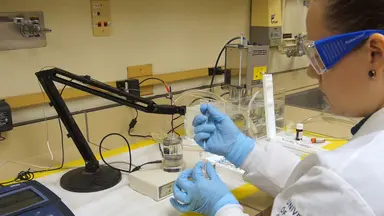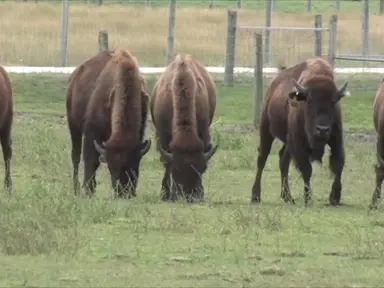
Our research involves improving beef cattle nutrition and production with a significant focus on feed efficiency and meat quality traits. Recently we had investigated several feed efficiency index of cattle, for example, the residual feed intake, to understand their impact on carcass and meat quality traits. We applied biochemical and molecular assays, including proteomics, lipidomics, and metabolomic approach, to investigate beef cattle nutrition strategy, particularly in feedlot diets.
Besides, we also aimed to explain the difference in meat-quality traits between cattle breeds and sex class. The last years, our finding explored the muscle tissue proteome of beef cattle, which allow us to a better understanding of heating or nutritional strategy used in the livestock production systems. Our lab will focus on omic-related analytic technologies and bioinformatics to identify proteins related to growth and meat quality traits of livestock species since they are the main constituents of muscle tissue, and also they are responsible for regulation of the main metabolic pathways.
To begin, place the longissimus thoracis, or, LT, muscle on the working platform. Measure the rib eye area in the 12th and 13th rib interface using a small grid with a dot in the middle. Sum all squares within the rib eye, tracing perimeter and those along the contour passing through the middle dot.
To measure the back fat thickness, place the caliper at a right angle to the line of the subcutaneous fat from the interface point between the 12th and 13th ribs. Calibrate the pH meter probe with pH four and seven buffers at room temperature. Measure the meat pH at three locations of the longissimus thoracis or, LT, muscle.
Manually record the data readings, export the data sheet, and calculate the average of the three readings. Homogenize the LT muscle in a methanol-chloroform solution for two minutes. Centrifuge the muscle suspension at 700g for 10 minutes at 20 degrees Celsius to segregate the hydrophilic, solid, and hydrophobic phases.
Aspirate the alcoholic layer. Filter the homogenate through filter paper on a funnel with a slight suction. Apply pressure with the bottom of a beaker when the residue becomes dry.
Transfer the filtrate to a 500-milliliter graduated cylinder and let it stand for a few minutes. Record the volume of the chloroform layer. Place the sample in an oven at 110 degrees Celsius until complete solvent evaporation.
Then cool the sample in a desiccator overnight. The next day, re-weigh the beaker and determine the intramuscular fat content by calculating the difference between the initial and final weights of the beaker. To calibrate the colorimeter, place the white calibration plate near the middle of the plate.
Confirm the calibration once the lamp flashes three times. After 30 minutes of blooming at four degrees Celsius, obtain color readings from three different locations on the LT muscle. Compute the average from three measurements.
To determine the purge loss of the beef loin section, measure the variance between the initial weight before freezing, the weight after freezing and thawing, and the final weight. To gauge the water-holding capacity, first weigh the meat sample before subjecting it to a pressure of 10 kilograms for five minutes. Then weigh the meat sample again and assess the water-holding capacity by calculating the weight differences.
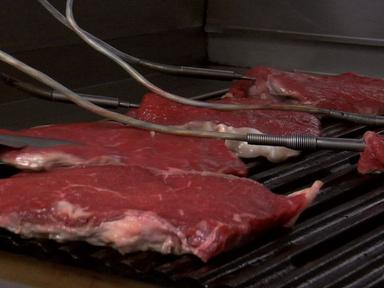
Position LT muscles on a grid. Attach to a glass refractory. Place the digital thermometer in the sample and cook the muscles in an industrial electric oven until reaching a final temperature of 71 degrees Celsius.
After cooling, weigh the sample and refrigerate at four degrees Celsius for 24 hours. Use the given formula to calculate the cooking losses. To determine drip loss, weigh the refractory before cooking the sample.
Place the samples on a grid over a glass refractory to allow drainage of meat juices and fat during cooking. After cooking, again weigh the refractory. Weigh only the sample before and after cooking to determine evaporation loss.
After recording raw and cooked weights, calculate the percentage of drip loss as the weight of drip after cooking divided by the weight of the thawed meat sample. Calculate the evaporation loss percentage using the given formula. For the determination of Warner-Bratzler shear force, section eight cores using a texture analyzer equipped with a Warner-Bratzler blade and V-shaped cutting edge.
After excluding the low and high extremes, report the results as the average of six values per sample. Homogenize three grams of LT muscles for 30 seconds in a potassium buffer at two degrees Celsius. Then centrifuge sample at 1, 000g for 15 minutes at four degrees Celsius and resuspend the pellet in 10 volumes of isolating medium using a stir rod.
Again, centrifuge and resuspend the pellet in 2.5 volumes of isolating medium. Pass the suspension through a polyethylene strainer to separate the connective tissue and debris. Use an additional 2.5 volumes of isolating medium to allow the myofibrils to pass through the strainer.
Next, dilute an aliquot of myofibril suspension with an isolating medium. Determine the protein concentration of the suspension of myofibrils using the biuret method. Immediately measure the absorbance at 540 nanometers.
Multiply the absorbance value by 200 to obtain the myofibrillar fragmentation index for each value. Significant differences in hot carcass weight, rib eye area, and back fat thickness were observed, with crossbred animals showing higher values, indicating a heterosis effect. Meat quality traits comparisons showed no significant differences in meat pH, purge loss, extractable volume percentage, and cooking loss between Nellore and F1 Angus Nellore bulls.
However, crossbred bulls had higher intramuscular fat, yellowness, water-holding capacity, and myofibrillar fragmentation index. The meat of Nellore bulls showed reduced tenderness with higher Warner-Bratzler shear force and drip loss, indicating it is tougher than the meat of F1 Angus Nellore bulls.